
Surfaces Safe (and Unsafe) for Steel Wool Sponges
Steel wool sponges are safe on cast iron, grills, and other uncoated stainless steel cookware built to handle abrasion. They are not safe on non-stick or ceramic-coated cookware — the steel fibers can scratch those coatings.
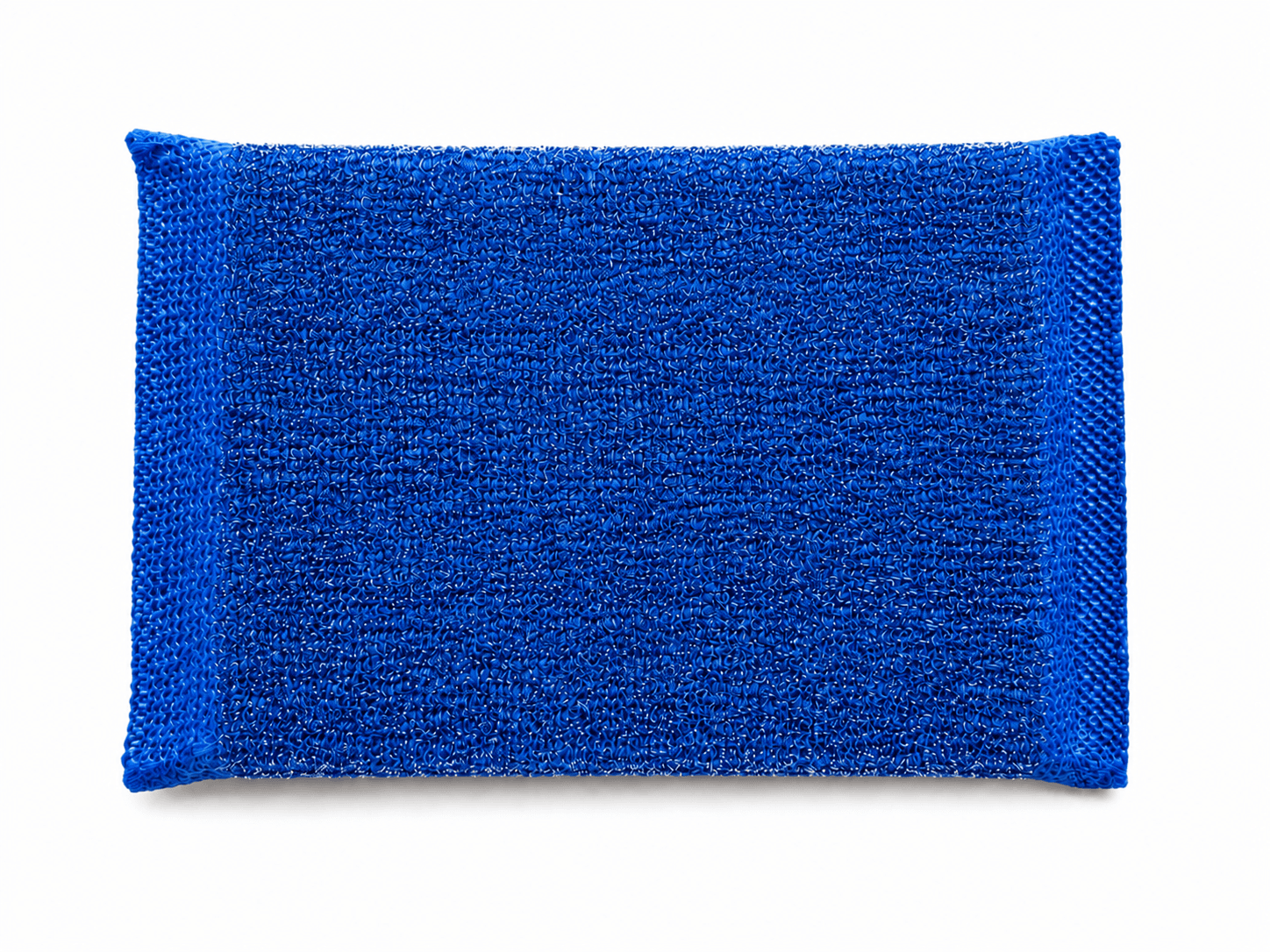
Where a steel wool sponge is the right tool
Steel wool sponges are built for heavy-duty jobs: cast iron pans, grills, and cookware with burnt-on grease or grime that a regular sponge can't touch. The dense steel fiber cuts through baked-on residue without breaking down the way an ordinary scouring pad does.
If a pan or grate is uncoated metal and can handle real abrasion, a steel wool sponge is generally the more effective choice for stubborn, cooked-on mess.
Where to avoid it
Non-stick and ceramic-coated cookware are the two surfaces to keep steel wool away from. The coating on both is soft compared to the pan underneath it, and steel wool fibers can scratch through it — which shortens the life of the coating and can affect how well food releases from it afterward.
For non-stick or ceramic pans, a soft sponge or non-abrasive cloth is the safer choice, even if it takes a little more effort on stuck-on food.
A quick way to decide
If you can scratch the surface with a fingernail or a butter knife without much effort, steel wool probably isn't the right tool for it. If the surface is bare metal built to take a beating — cast iron, grill grates, uncoated stainless steel — steel wool is exactly what it's for.