
Steel Wool Sponge vs. Plastic Scrubber: Which Should You Use?
A steel wool sponge cuts through burnt-on grease and holds up far longer than a plastic scrubber, but plastic scrubbers are the safer, non-scratching choice for non-stick, ceramic, and other coated cookware.
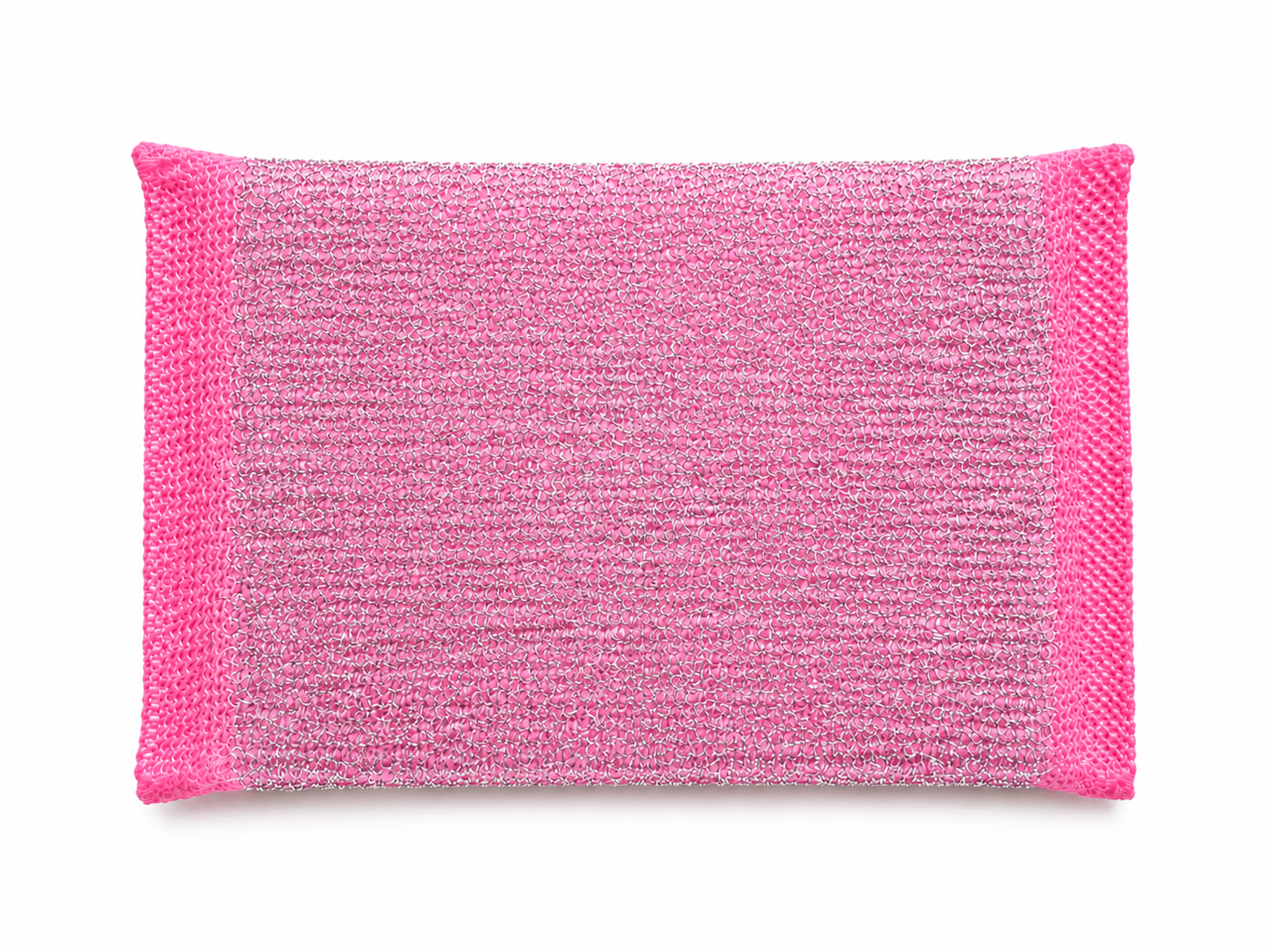
Cleaning power
Steel wool cuts through burnt-on grease and stuck-on food with far less effort than a plastic scrubber, which is built to be gentle rather than aggressive.
Surface safety
This is the real deciding factor: plastic scrubbers are non-abrasive and safe on non-stick, ceramic, and other coated cookware. Steel wool is not — it can scratch those same coatings, so it should be kept for uncoated, heavy-duty surfaces like cast iron and grills.
Durability
Genuine steel wool holds its shape wash after wash. Plastic scrubbers tend to flatten, fray, or lose their texture with regular use, needing more frequent replacement.
Which to keep in your kitchen
Most kitchens genuinely benefit from having both: a plastic scrubber for non-stick and ceramic cookware, and a steel wool sponge for cast iron, grills, and anything with real burnt-on residue.