
Does a Steel Wool Sponge Rust?
Genuine stainless steel wool resists rust far better than ordinary steel wool, but it isn't completely rust-proof — leaving it wet and balled up between uses is the most common cause of discoloration. Rinsing it and letting it air dry, the same as any steel wool product, is what keeps it looking and performing its best.
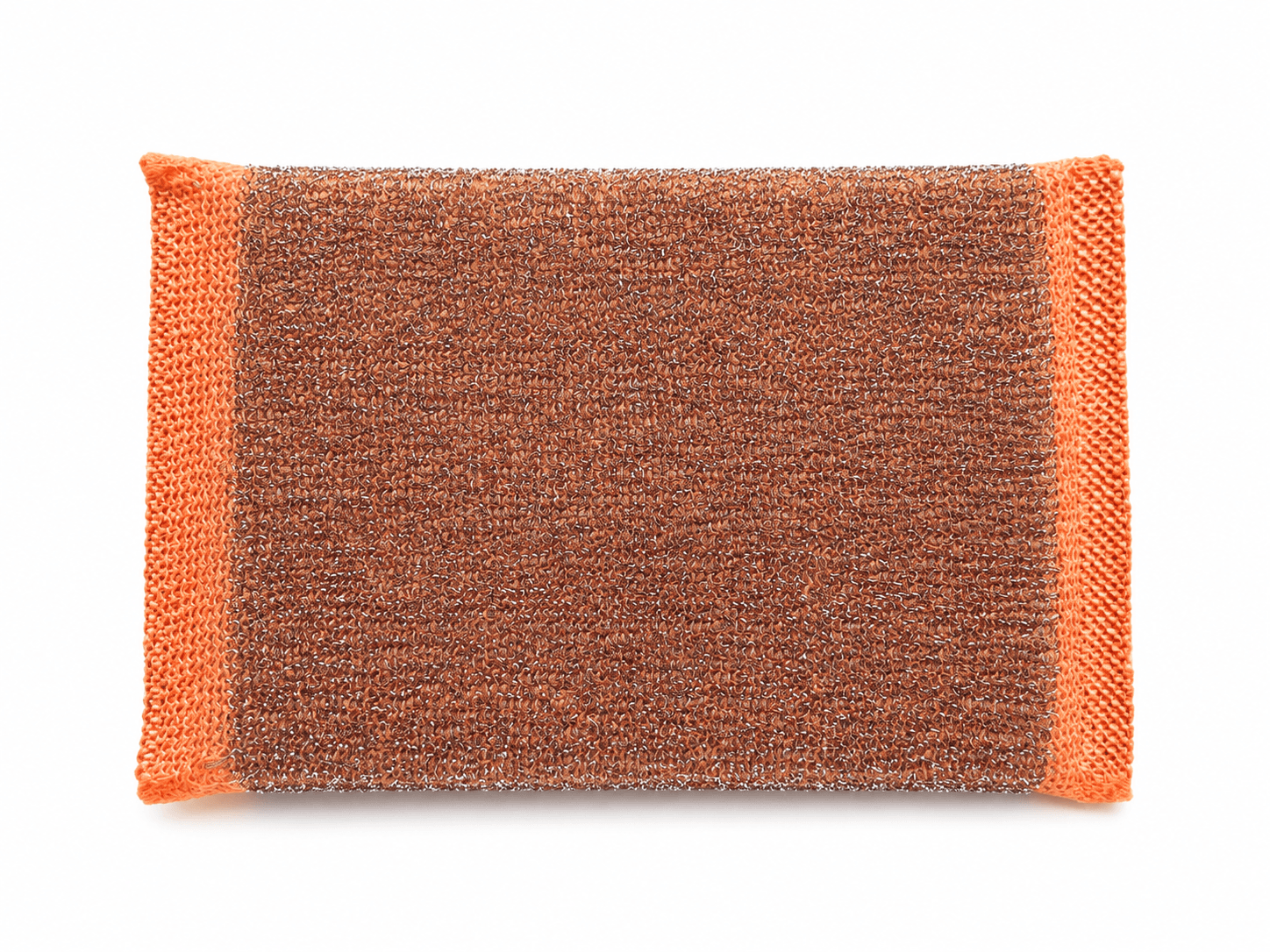
Why stainless steel resists rust in the first place
Stainless steel contains chromium, which forms a thin protective layer on the surface of the metal — this is what makes it far more resistant to corrosion than ordinary carbon steel wool, which rusts quickly if it so much as sits damp for a day.
When discoloration can still happen
Even stainless steel isn't completely immune. Leaving a sponge wet and balled up in a closed container, sink caddy, or damp corner — with no airflow — is the most common way any steel wool product develops surface discoloration over time. Hard water with a high mineral content can also leave spotting on any metal surface, sponge included.
How to prevent it
The fix is the same one that keeps a steel wool sponge holding its shape generally: rinse it thoroughly after each use, and let it air dry between uses rather than leaving it wet and enclosed. That's the full routine — no special treatment or storage product needed.